📄 2045 Transfer Portal Rankings: Winners, Surprises, and the Classes That Could Reshape the Landscape
- Team Spotlight
 KeVbK
KeVbK- 0
- 19 minutes read
By the On3 Transfer Portal Desk | Updated following signing period close
The 2045 transfer portal cycle is officially in the books, and as the dust settles on 564 completed moves across the country, a handful of programs emerge as clear winners — and a few familiar names did enough damage in the portal to raise some eyebrows heading into next season. Here’s our breakdown of the best transfer classes of the cycle.
The Top 10 Transfer Classes
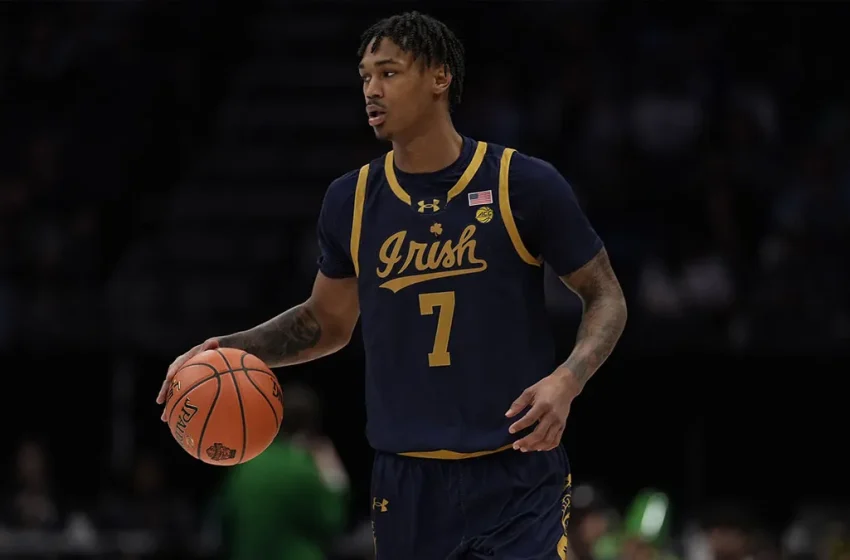
1. Notre Dame Fighting Irish — Atlantic Coast Conference
6 transfers | Program prestige: 89
Agalia’s program didn’t just win the portal — they redefined what a six-man class can look like. The headliner is Desmond Garcia, a 6-8 power forward from Troy who averaged 14 points a night last season as a full-time starter, shooting efficiently and moving without the ball as well as anyone at his position in the country. Garcia blocked shots at a strong rate while handling a heavy offensive load — the kind of player who gives opposing coaches nightmares in the film room.
The second piece is E.J. Fritz, a 6-6 forward out of Le Moyne who did everything the right way in his previous stop — rebounding on both ends, protecting the rim, and getting to the line. Keylon Robertson slides in as a pass-first point guard who logged heavy minutes at Nebraska, distributing at a clip that immediately upgrades Notre Dame’s offensive flow. Jacob Bennett (Pepperdine) chips in shooting range from the wing, connecting at better than 46% from deep last season.
This class has legitimate ACC title implications. Garcia alone would have been a top-five pickup nationally.
2. Michigan Wolverines — Big Ten Conference
4 transfers | Program prestige: 73
Michigan got two guys they can put in the lineup tomorrow and make you pay. Dantrell Covington comes in from Iowa as a relentless rebounder — a 6-9 forward who was a constant presence on the glass despite coming off the bench, sporting a sky-high block rate and strong hands around the rim. He converts at over 50% from the field and brings an energy and motor that a Michigan frontcourt badly needed.
The second key piece is Brian Perry from Seton Hall — a 6-6 wing with legitimate three-point range, connecting on better than 36% of his attempts last season while playing an efficient, no-frills offensive game. Perry’s real value, though, is on the other end: he’s an above-average defender at the wing position who can be trusted against elite perimeter scorers in conference play.
For a Michigan program still building back toward Big Ten relevance, landing two high-end contributors in a single cycle is exactly the kind of haul that changes a program’s trajectory. Don’t sleep on the Wolverines in February.
3. Baylor Bears — Big 12 Conference
4 transfers | Program prestige: 100
This is the most cohesive class in the country. Baylor didn’t swing for one superstar — they built a complementary four-man unit that fits like a glove around whatever core Lloyd is returning. Every single transfer in this class is a high-quality contributor, and the Bears did it with real positional diversity.
Kurtis Carver (Alabama A&M) is the most intriguing name — a 6-5 wing who shot nearly 47% from three last season while also contributing on the glass and logging over 22 minutes per game. He’s not a star, but he’s exactly the kind of efficient, multi-dimensional glue guy that wins championships. Lavonne Garrett gives Baylor a proven scorer from Princeton — 14 points a game over 26 minutes, a high-usage guard who can create off the dribble. Sol Moon and Barack Head round things out in the frontcourt with reliable interior presence.
Baylor’s class won’t generate the same headlines as Notre Dame’s. But when you have the nation’s top prestige program and your four transfers all fit together this neatly, you make a very strong case for best-managed class of the cycle.
4. Minnesota Golden Gophers — Big Ten Conference
6 transfers | Program prestige: 91
Minnesota adds six, and while the back end of this class is depth-level, the top names give the Gophers something to be genuinely excited about. Samuel Orozco arrives from Florida State as a shooting guard with the athleticism and energy to play extended minutes immediately. Dontae Christianson, a 6-5 point guard from Arkansas, is a natural playmaker who showed a strong feel for running an offense in SEC competition — his passing instincts alone make him one of the better floor generals available in this cycle.
The wildcard is Dave Westfall, a 6-8 center arriving from Nevada with elite rebounding instincts — he cleans the glass on both ends at a level that jumps off the stat sheet, and he’s the kind of interior anchor that lets your perimeter players gamble and be aggressive defensively. Orozco and Westfall starting alongside returning contributors gives the Gophers a genuinely competitive frontline in the Big Ten. Pair this with Minnesota’s prestige trajectory and this is a program to take seriously.
5. Iowa State Cyclones — Big 12 Conference
4 transfers | Program prestige: 36
This one belongs in the conversation for biggest overachiever of the cycle. Iowa State is a 36-prestige program. They somehow landed Luther Coleman.
Coleman — a 6-0 point guard out of Incarnate Word — was one of the most coveted guards in the portal. A WSSN top-60 recruit who proved his pedigree with solid defensive instincts, reliable ball-handling, and consistent scoring. He’s a player who elevates everyone around him and can create off the bounce in ways that low-major programs rarely get access to. Chester Winn (Coastal Carolina) adds a physical frontcourt body, and Wilbert Ferry (App State) stretches the floor from the wing.
Iowa State likely overpaid in NIL to make this happen. But if Coleman lives up to the billing, the Cyclones are a dark horse in a Big 12 that tends to see blood in the water when programs like this show up with talent.
6. Florida State Seminoles — Atlantic Coast Conference
3 transfers | Program prestige: 81
Small class, but it may be the highest floor of any group in the ACC. Harmon McMahan is the get. The 6-2 point guard from Marquette shot nearly 47% from three in limited minutes last season — an absurdly efficient mark — while showing elite court vision and passing ability that had multiple power programs in on him until late. He’s a legitimate starting point guard for an ACC contender, and that’s exactly what Florida State is getting.
Leo Fisher (St. John’s) steps into a frontcourt role as a legitimate rim protector and offensive rebounder who averaged over a block per game. He won’t give you much at the offensive end, but his length and activity on the glass give FSU a defensive anchor they lacked. Toss in Marcus Anderson from Illinois — a high-IQ perimeter defender with active hands — and Florida State’s coaching staff has done serious work with a limited number of commits.
7. Alabama Crimson Tide — Southeastern Conference
4 transfers | Program prestige: 79
Alabama’s class is a quietly smart one. The theme is physicality and rebounding — every player in this group can bang. Kauko Karhu, a 6-8 forward from Syracuse, is the lead piece — a versatile power forward who averaged nearly five boards per game while holding his own on the perimeter, extending to three-point range at a solid clip. Keith Gross brings size and a surprisingly strong block rate out of Minnesota, while M.C. Self gives the Tide a true interior scorer who converted at 56% from the floor last season and chipped in nearly five rebounds per game.
This isn’t a glamorous group. But the Tide needed interior toughness and they found it. Three big men who can rebound and defend inside makes Alabama a legitimate second-half nuisance in the SEC.
8. VCU Rams — Atlantic 10 Conference
3 transfers | Program prestige: 93
Mike Rhoades’ program keeps the formula working. VCU brought in Kuisma Pesola and Robb Reece — two big men who combined to average nearly 12 rebounds per game at their previous stops. Pesola (St. Bonaventure) is a bruising interior presence who also stepped out and shot 45% from three in limited attempts. Reece (Minnesota) is a high-motor rebounder at 6-8, 274 lbs who excels at cleaning the glass and protecting the interior. This duo makes VCU one of the most physically imposing frontlines in the A-10.
At 93 prestige and operating in a mid-major conference, VCU winning this kind of frontcourt haul is exactly the kind of recruiting win that keeps them a consistent NCAA Tournament threat.
9. Louisville Cardinals — Atlantic Coast Conference
4 transfers | Program prestige: 95
A somewhat disappointing class for a program of Louisville’s stature, but there’s real substance here if you look past the volume. Michael Croom (Oklahoma State) is a versatile 6-4 guard who can defend multiple positions, distribute the ball, and hit from the perimeter — a genuine two-way contributor who averaged nearly three assists per game despite sharing the ball heavily in Stillwater. Brad Farmer (Iowa) adds another perimeter defender with legitimate three-point range, and he’s shown the ability to run a lineup as a point guard.
For a 95-prestige program, this class doesn’t move the needle the way it should. But Croom is a starting-caliber ACC player, and if Farmer develops, Louisville’s backcourt could be a real problem next season.
10. Iowa Hawkeyes — Big Ten Conference
4 transfers | Program prestige: 60
Iowa’s class sneaks into the conversation on the strength of one player: LaMarcus De Leon from Monmouth. The 6-7 forward was among the most productive players at the mid-major level last season — scoring over 13 points per game, pulling down nearly six rebounds, and shooting 43% from three as a starter logging over 32 minutes per night. De Leon was a recruit who slipped under the radar but has clearly developed into a legitimate high-major contributor.
Leon Green gives the Hawkeyes a genuine pass-first point guard who created nearly six assists per game while logging full starter minutes — the kind of distributor that can upgrade Iowa’s offensive system overnight. Carmello Wilson (Indiana State) adds shooting and scoring off the bench. At 60 prestige, this class punches well above its weight.
Honorable Mention
San Diego State | Mountain West Conference | Prestige 71
The Aztecs may have made the shrewdest single pickup of the cycle: Omari Gomez, a wing from Michigan State with legitimate defensive credentials and a polished offensive profile. One commitment, one need addressed. Clean and efficient.
Stanford | Atlantic Coast Conference | Prestige 78
Stanford addressed multiple needs with four solid additions, led by Aldo Wells, a 6-9 center who posted 6.6 rebounds per game at USC and gives the Cardinal a legitimate anchor in what should be a tough ACC schedule. Lebron May adds perimeter scoring and shooting touch off the bench.
Mississippi State | Southeastern Conference | Prestige 67
The Bulldogs made one targeted commitment — Tivonte Bartley, a sharpshooter who connected at 45% from deep at Saint Louis — and that’s exactly what they needed. Sometimes the best class is the most focused one.
Evansville | Missouri Valley Conference | Prestige 49
This one is purely for the mid-major watchers: two transfers, both high-quality contributors, at a 49-prestige program. Terry Carter (Indiana) and Brady Hutchinson (SMU) give Evansville a competitive one-two punch that could carry them deep into the Valley race. Don’t blink.
The Bottom Line
The portal remains the great equalizer — Iowa State landing a top-60 recruit proves that. But the programs that used it most effectively weren’t necessarily the ones chasing the biggest name. Baylor’s four-man haul of complementary pieces, Notre Dame’s mix of star power and depth, and Florida State’s surgical three-man class all stand as examples of how to use the portal as a construction tool rather than a panic button.
The teams that win championships in 2044-45 will almost certainly include multiple programs from this list. Notre Dame and Baylor have the most complete rosters. Michigan may be the most improved. And somewhere in Iowa City, Leon Green is already running point in an up-tempo system that’s about to cause problems for the Big Ten.
Transfer class rankings are based on an analysis of 564 completed portal commitments across 258 programs in the 2045 signing period.