📄 CBGM’s Top Players in Portal for Season 2045
- Player Spotlight
 CBGM News
- 0
- 16 minutes read
The transfer portal always reshapes the college basketball landscape, each year’s class is loaded with players capable of changing a program’s trajectory in a hurry. Some bring proven production, some bring raw upside, and some look ready to explode in a bigger role the moment they land in the right system.
In this breakdown, we take a closer look at the top names in the portal and what makes them so valuable. From scoring guards to versatile forwards to impact big men, this is a look at the skill sets, fit, and ceiling of the players drawing the most attention as the portal market heats up.
Top #1 to #5 Players
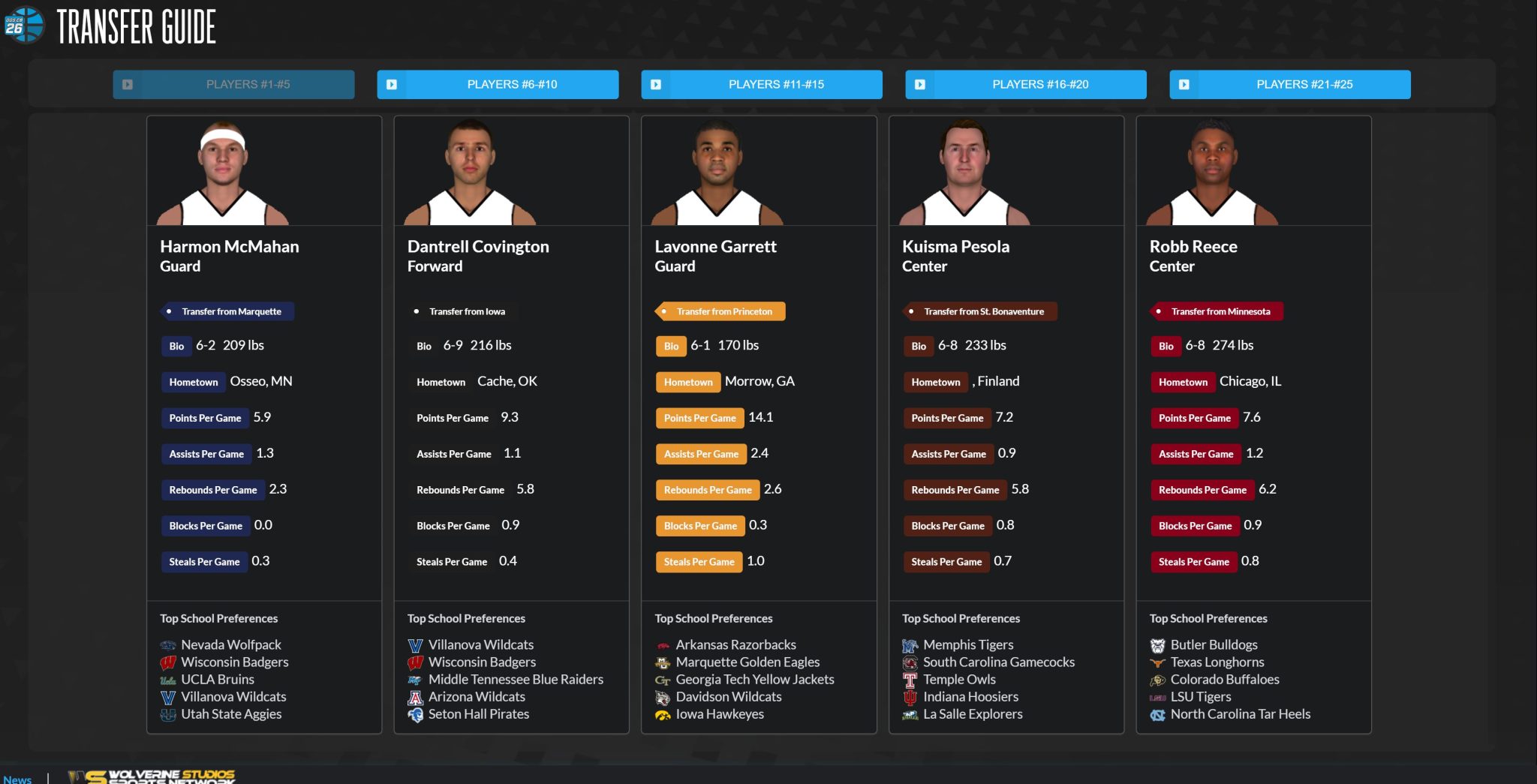
1. Harmon McMahan (Marquette) — Guard
Why he stands out:
McMahan is one of the more intriguing guards in the portal because his production only scratches the surface. He averaged 5.9 points, 1.3 assists, and 2.3 rebounds per game, but the deeper profile is much more promising than that line suggests.
Offensive profile:
At 6-foot-2, 209 pounds, McMahan brings sturdy size for a college guard, but the real draw is the skill mix. He owns 82 outside shooting, 92 passing, and 90 athleticism, which is a very appealing combination. He looks like the kind of guard who can keep an offense flowing, stretch the floor, and make quick decisions without bogging everything down. He is not a rim-pressure guard first, but he can still pressure defenses by making the right read and punishing space.
What the numbers suggest:
His floor-range profile leans heavily toward midrange and outside shots, which fits the ratings. He is clearly more comfortable playing as a perimeter initiator than as a downhill attacker living at the basket. That makes him a very interesting fit for teams that want offensive organization, shooting gravity, and secondary playmaking all in one spot.
Big question:
The defensive profile does not pop the same way. For a guard with that athleticism, you would want a little more bite on that end. He does not look like a tone-setting perimeter stopper, so the next staff needs to know exactly what they are getting: an offensive connector, not a two-way wrecking ball.
Portal takeaway:
McMahan feels like a breakout candidate. He is the kind of transfer who could jump a tier quickly if he lands in the right system and is given more offensive responsibility.
2. Dantrell Covington (Iowa) — Forward
Why he stands out:
Covington looks like one of the best upside swings in the portal. He has size, athleticism, rebounding, and enough scoring versatility to fit a lot of different roster builds.
Offensive profile:
At 6-foot-9, 216 pounds, Covington averaged 9.3 points and 5.8 rebounds per game, and the ratings back up the appeal. He has 76 inside scoring, 72 outside shooting, and 94 athleticism, which gives him the look of a very modern forward. He can finish around the basket, run the floor, and contribute without needing the ball all the time. That matters. He does not need to be a primary option to impact a game.
What the numbers suggest:
His shooting profile still leans more toward the interior and midrange than the three-point line, but the outside number hints that there may be more perimeter value to unlock. He looks like a player who can already help as a cutter, rebounder, and transition piece, while still leaving room for a staff to expand his role.
Defensive value:
This is where the intrigue really builds. Covington brings 80 offensive rebounding, 79 defensive rebounding, and enough defensive activity to believe he can matter on that end. He may not be a lockdown star defender, but he looks like the kind of forward who can cover ground, disrupt plays, and help a team get more athletic without sacrificing size.
Big question:
The refinement is not all the way there. His court IQ and discipline numbers leave some room for growth, and he is not the kind of forward you want creating offense off the bounce every trip. But that is not really the role he needs to fill.
Portal takeaway:
Covington looks like a high-upside modern forward who can help immediately and still has another level in him.
3. Lavonne Garrett (Princeton) — Guard
Why he stands out:
Garrett feels like the most natural scorer in this top five. He averaged 14.1 points per game, and everything else in the profile reinforces the same point: this is a guard wired to put points on the board.
Offensive profile:
Garrett is a 6-foot-1, 170-pound guard with a 77 scoring rating, strong perimeter tendencies, and the kind of offensive confidence that jumps out right away. He is not a downhill bruiser, but he is clearly comfortable hunting jumpers and carrying real scoring responsibility. His shot profile says scorer, and loudly.
What the numbers suggest:
He is much more of a perimeter-oriented offensive threat than a paint-pressure guard. That gives him instant appeal for teams that need shot creation without having to fully rebuild the offense around him. He looks like a player who can slot in and immediately become one of the primary scoring threats in the backcourt.
Secondary strengths:
He is not just a volume shooter. Garrett’s best offensive set proficiency comes in Princeton concepts, which suggests a scorer who can operate within structure rather than simply freelancing every possession. His passing is good enough to stop defenses from loading up too aggressively, and there is enough defensive activity in the profile to believe he can stay on the floor on both ends.
Big question:
How much offense can he carry at a higher level? He looks like a very good scorer, but probably not someone you want carrying every creative burden for a roster. He feels better as a featured scorer within a system than as a total offensive engine.
Portal takeaway:
Garrett may be the most ready-made scoring addition in this group. If a team needs points now, he will draw attention fast.
4. Kuisma Pesola (St. Bonaventure) — Center
Why he stands out:
Pesola is one of the most interesting bigs in the portal because he does not read like a standard center. He is not just an interior body. He looks much more like a scheme piece with real structural value.
Offensive profile:
At 6-foot-8, 233 pounds, Pesola averaged 7.2 points and 5.8 rebounds per game, which is solid production. The more revealing part is his set proficiency. He grades well in Motion, Princeton, Triangle, 1-3-1 Attack, 2-3 Attack, and 1-2-2 Attack, which tells you he is not just a drop-the-ball-inside big. He looks like a frontcourt player who can function inside real offensive structure and help a system stay connected.
What the numbers suggest:
Pesola carries 68 inside shooting and 68 outside shooting, even though his actual shot profile leans much more toward post and midrange play than high-volume perimeter shooting. That suggests there may be more offensive range here than his old role showed. He is probably not a true stretch five, but he also does not look one-dimensional.
Defensive value:
He rebounds well enough, blocks some shots, and looks reliable enough to hold up in half-court settings. He is not an explosive athlete, but he does not have to be if the team using him understands what kind of center he is. He looks like a player who can help stabilize a frontcourt rather than transform it with sheer physical upside.
Big question:
The athleticism is a real concern. So are the discipline and free-throw numbers. That limits the range of systems he can fit cleanly. He does not project well into a frantic, full-speed style that constantly leaves its center out in space.
Portal takeaway:
Pesola feels like a smart-team target — the kind of big man coaches value because he fits into structure and helps things make sense.
5. Robb Reece (Minnesota) — Center
Why he stands out:
Reece is the most matchup-specific player in this group, but that does not make him less valuable. In the right role, he can absolutely swing games.
Offensive profile:
At 6-foot-8, 274 pounds, Reece brings obvious size and force. He averaged 7.6 points, 6.2 rebounds, and 0.9 blocks per game, and the ratings show where that value comes from. He owns 83 inside scoring, rebounds well on both ends, and has the physical profile to make life miserable around the basket. He is not subtle. He is there to bring force.
What the numbers suggest:
There are a few interesting wrinkles in the profile. His 66 passing is better than you might expect for a center built like this, and his steal number is also stronger than expected. That suggests a little more feel and activity than the typical paint-bound big stereotype. His shot profile is also curious. For someone with almost no outside game, the heavy midrange weighting hints that there may be more touch here than the label first suggests.
Defensive value:
Reece gives a team real size, rebounding, and shot-blocking value. If a program needs more interior resistance, he can help immediately. He is the kind of big who can change the tone of a game simply by making the paint feel crowded and physical.
Big question:
Fit is everything. His athleticism is limited, the court IQ number is shaky, and the discipline raises another concern. He does not look like a center built for space, pace, and constant defensive scrambling. Ask him to do too much outside a defined role, and the weaknesses could show quickly.
Portal takeaway:
Reece feels like a tactical weapon. Against the right opponent, he could look like a portal steal. Against the wrong one, the limitations become more obvious. That makes him one of the more scheme-dependent, but also one of the more dangerous, bigs in the group.
Top #6 to #10 Players
Top #11 to #15 Players
Top #16 to #20 Players
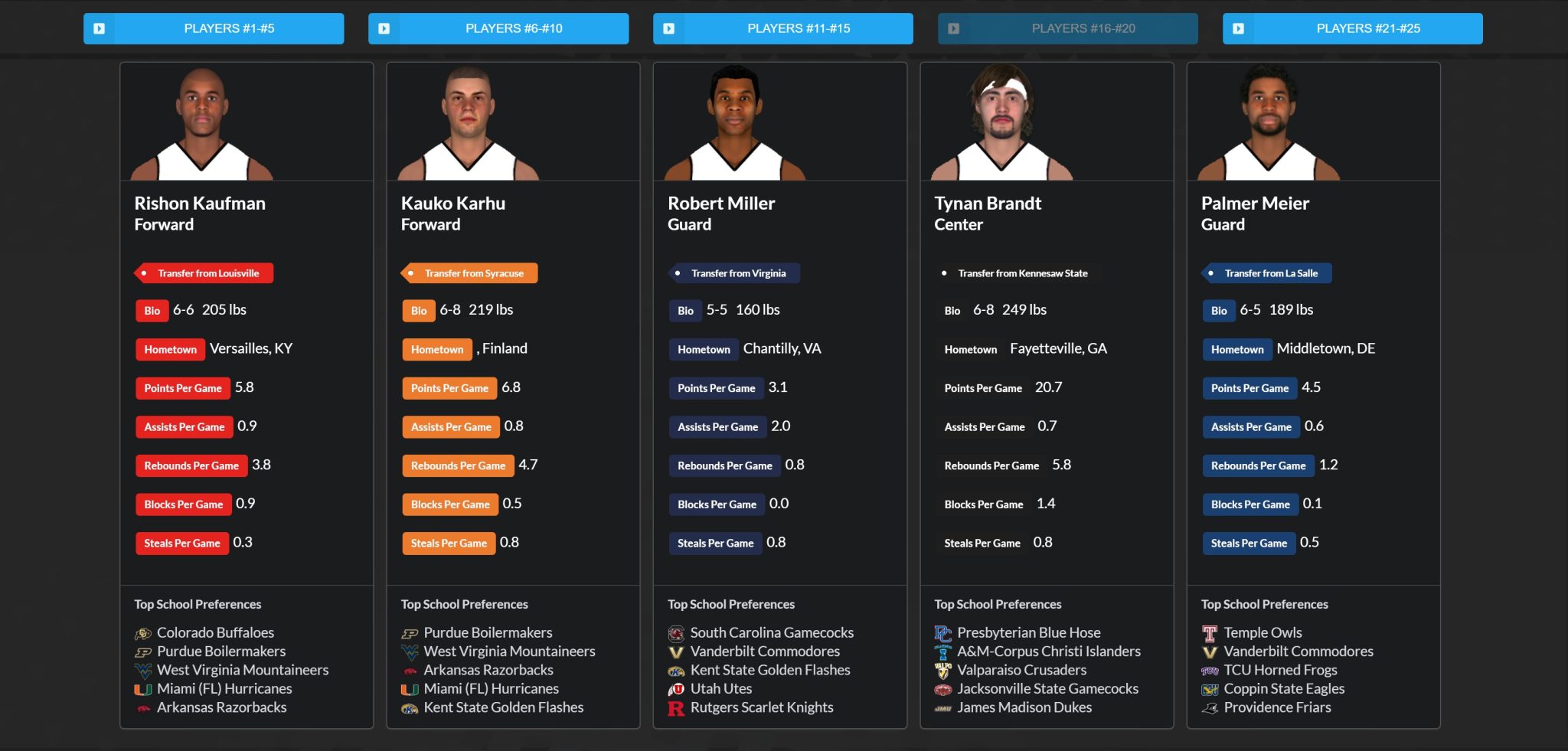
Top #21 to #25 Players
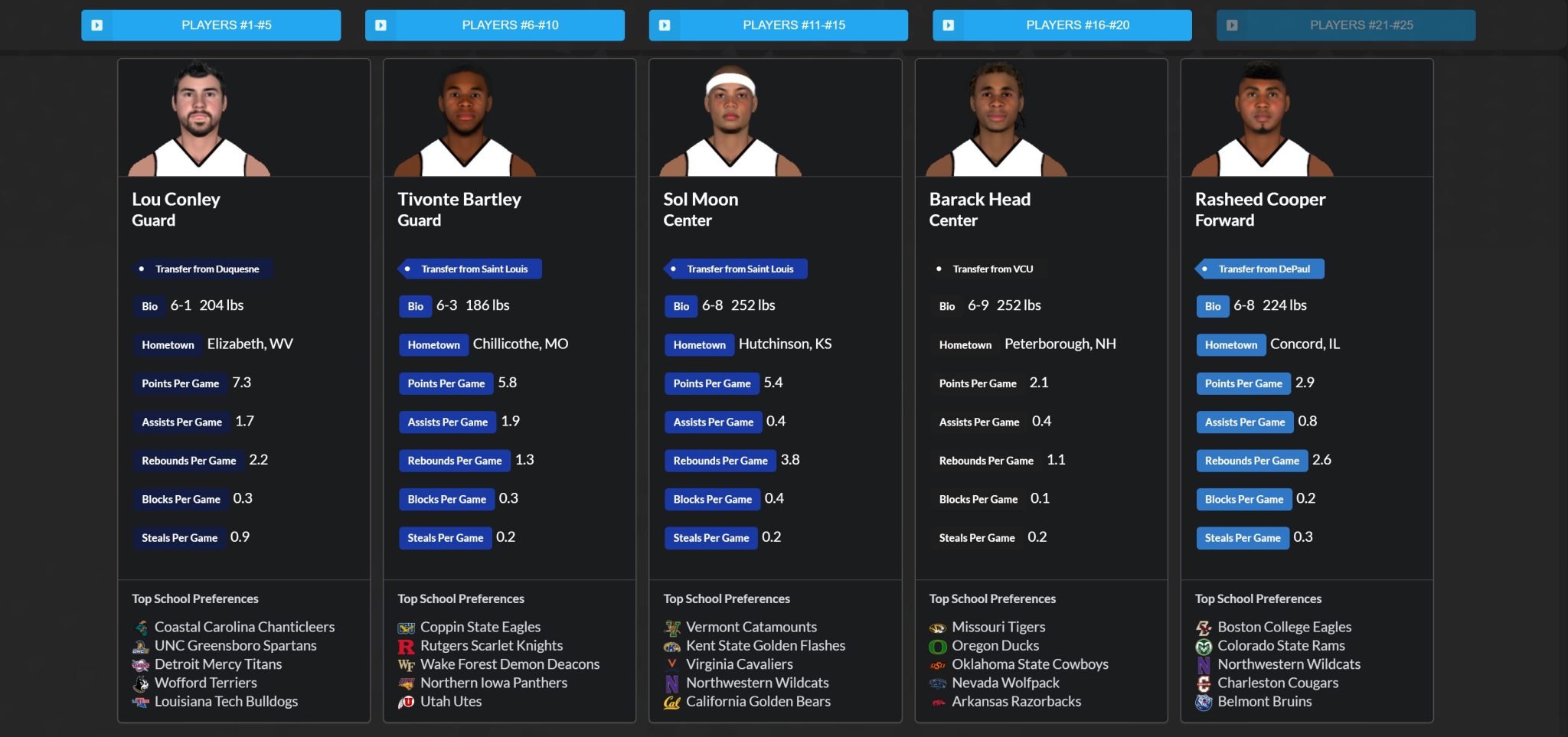
Good luck this CBGM Season.